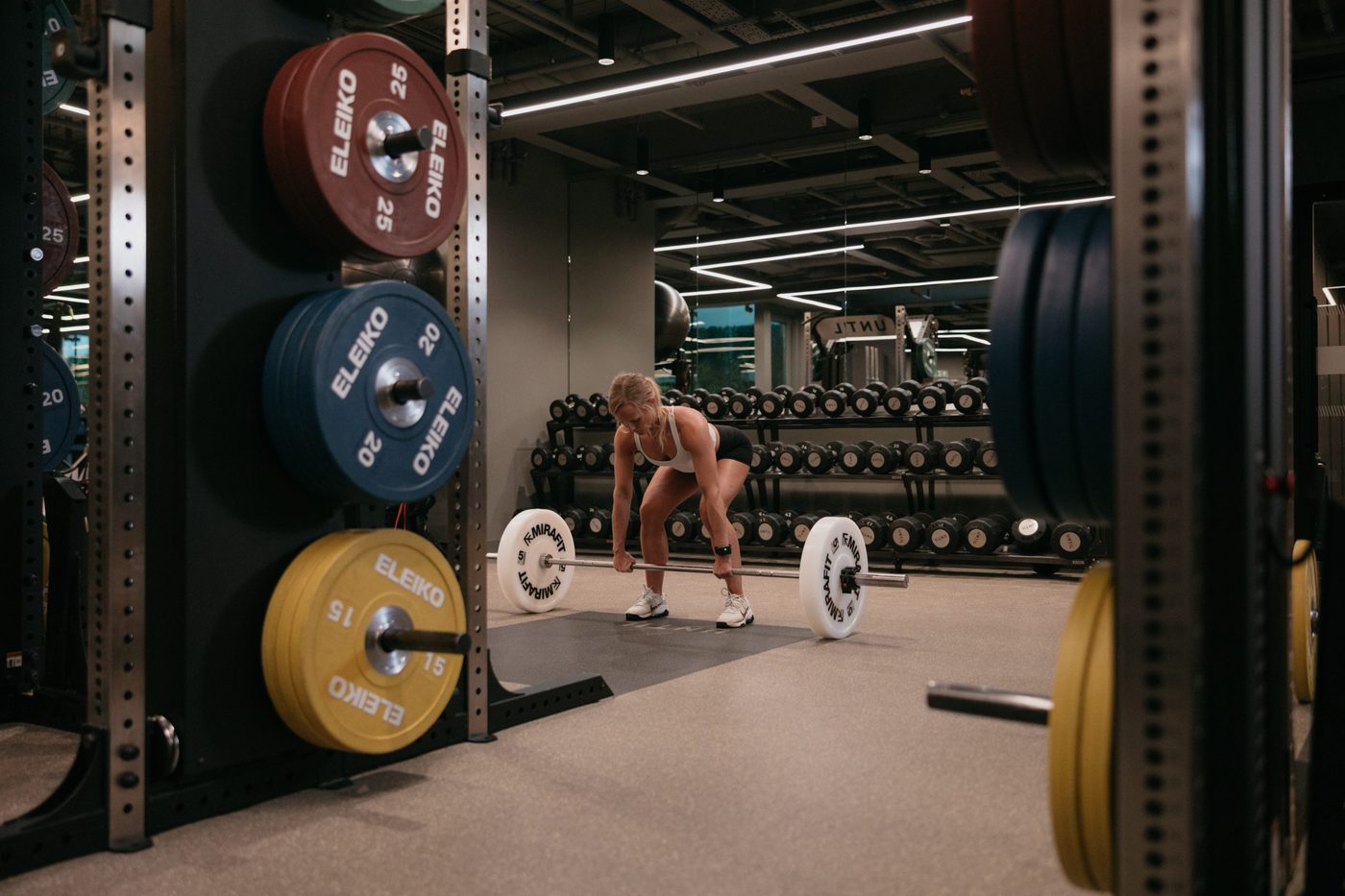
What a bar-speed test told us about Elise's clean
Jack Sterry
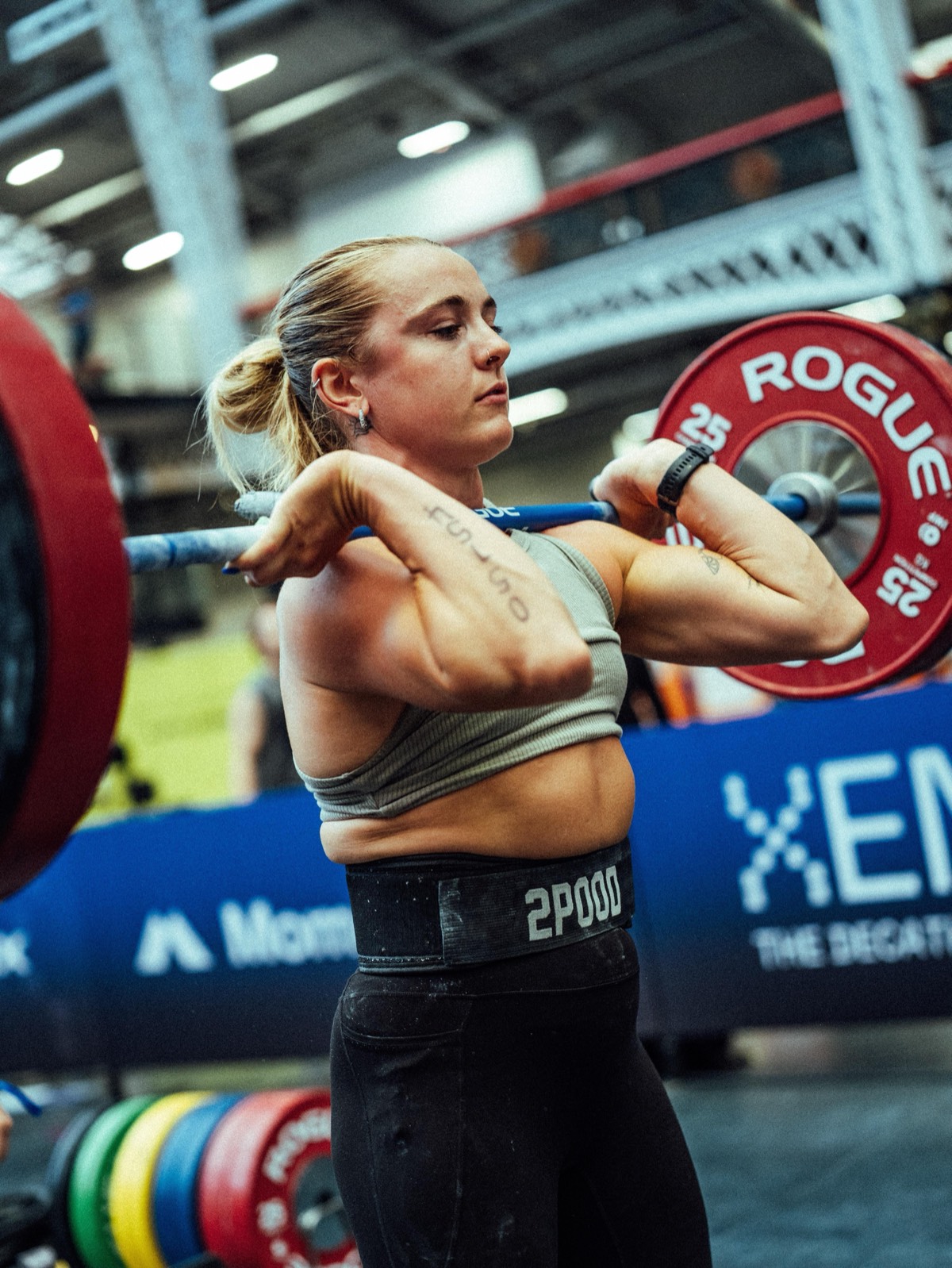
"Percentages are a guess," says Jack Sterry in a new blog post. A 1RM tested weeks ago doesn't tell you how a lifter is moving today, after a long shift, a bad night's sleep or a heavy week of training.
To understand Elise's hang power clean properly, Jack stopped asking only how much she could lift and started measuring how fast the bar was moving.
Measuring barbell velocity
Jack used REMAKER MOVE to record the velocity of every rep. After a lower-body warm-up, Elise worked up through 30%, 50%, 70%, 80% and 90% of her 1RM, with fewer reps as the load climbed. Average bar speed at each load was plotted as a force-velocity profile, and each lift was placed in a training zone:
- Speed: above 1.3 m/s
- Speed-strength: 1.0–1.3 m/s
- Power: 0.75–1.0 m/s
- Strength-speed: 0.5–0.75 m/s
- Maximal strength: below 0.5 m/s
What he found
Elise's first test showed a very flat profile. Her bar speed dropped by only 0.22 m/s between 30% and 90%, and everything from 30% to 80% sat in the same speed-strength band. Jack is careful to compare the clean with Elise's own earlier results rather than her other lifts, because Olympic lifts naturally give flatter profiles than something like her box squat.
Jack took two things from that first test. "First, she wasn't getting much extra speed out of light loads, so there was room to train her to be more explosive. Second, moving 90% at 0.93 m/s suggests her working 1RM was on the conservative side: she had more in the tank than the number on paper."
At the retest, the bar moved faster at 30%, 50%, 70% and 90%:
- 30%: 1.15 → 1.33 m/s
- 50%: 1.11 → 1.31 m/s
- 70%: 1.08 → 1.15 m/s
- 90%: 0.93 → 1.09 m/s
"The shape of the curve didn't change much; the whole line moved up," says Jack. "That's the result we wanted: the same weights now leave the floor faster."
Her two lightest loads now reach the speed zone, above 1.3 m/s.
What it means for Elise's training
This is where velocity turns into programming. Elise's October plan had her doing an EMOM of 2 reps at 75–80%, aiming for 1.0–1.05 m/s. The retest shows those loads now move at around 1.1 m/s or faster, so the weight is too light for its job. Jack's plan is to add load until her bar speed comes back into the 1.0–1.05 m/s window, then retest at the end of the next block.
For Jack and Elise, bar speed has replaced a guess with a number that shows exactly when she is ready to lift more.
For the full blog post, head to Jack's Substack here.