

Topic guide
Velocity-based training: the complete guide
What VBT is, how velocity zones and load-velocity profiling work, and how to put bar speed to work in your own programme.
What is velocity-based training?
Velocity-based training (VBT) is data driven approach to strength training that uses bar speed to guide decisions about load.
Training readiness swings with sleep, stress, soreness and accumulated load. Some sessions you will be primed to lift heavy, others you will feel weaker than normal. VBT allows you to set a target velocity zone, which then auto-regulates the load you should be lifting - if you are moving the bar faster than your target zone, you are ready to increase your weight, but if you are lifting slower than your target zone, that's a sign to drop down. This simplicity is why it has spread from research labs into professional clubs, university programmes, PT studios and home gyms.
How do velocity zones work?
Every strength quality lives in a velocity band. Measured on the concentric (lifting) phase of a rep, the commonly used zones are:
- Absolute strength - roughly under 0.5 m/s (heavy, slow lifts)
- Accelerative strength - ~0.5–0.75 m/s
- Strength-speed - ~0.75–1.0 m/s
- Speed-strength - ~1.0–1.3 m/s
- Starting speed - above ~1.3 m/s (light, explosive work)
To make the zones easier to understand, we put them in the REMAKER app as follows:
- Max strength - 0.2-0.5 m/s
- General strength - 0.5–1.0 m/s
- Power - 0.75–1.3 m/s
- Speed - 1.3 m/s and above
What is load-velocity profiling?
For a given lift, load and velocity sit on a close-to-linear line: add weight, and velocity drops by a predictable amount. Plotting a handful of sets gives your load-velocity profile, which lets you estimate your 1RM on any day without ever maxing out.
What do you need to measure velocity?
A validated measurement device, and consistency in how you use it. The main options are accelerometer-based wearable sensors, tethered linear position transducers, and camera/computer-vision systems. Each option comes with trade-offs in accuracy, setup time and versatility. Our 2026 VBT device buyer's guide breaks the categories down in full.
REMAKER MOVE is an accelerometer-based sensor: it clips to the bar or the athlete and measures free-weight exercises, jumps and range-of-motion with one unit. In lab validation against VICON 3D motion capture, MOVE tracked velocity at r = 0.998 across 2,731 reps. Full details are published on our validation page.
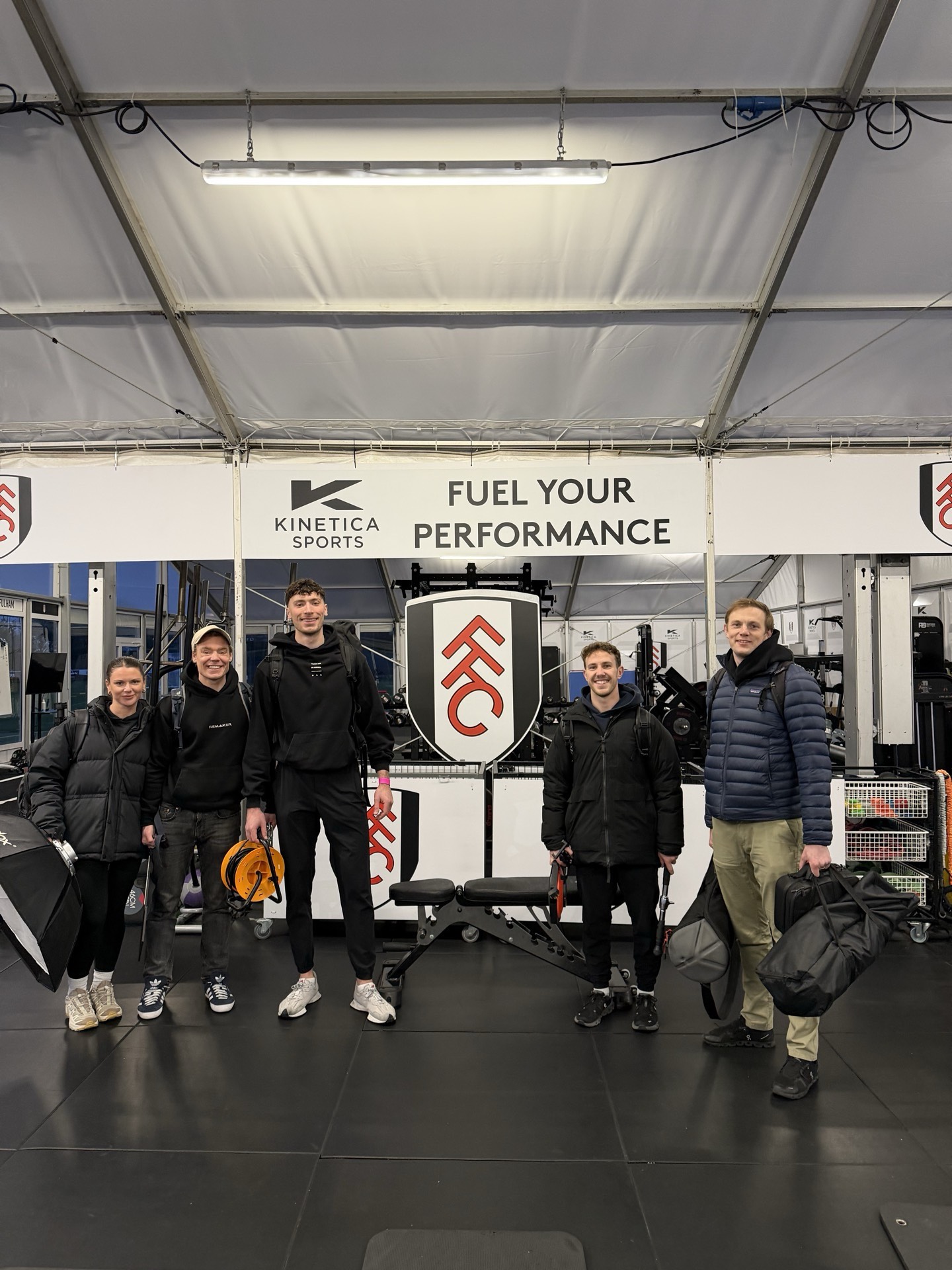
Interested to see how Fulham FC's first-team performance staff use MOVE and LINK across their squad? Here's how it reshaped their training.
FAQs
Is velocity-based training only for elite athletes?
No. VBT started in professional sport, but the method is universally applicable: a recreational lifter uses the same velocity zones and 1RM estimation.
What is the core principal of velocity based training?
The key in whichever zone you choose is intent: always move the bar as fast as you can.
What velocity should I lift at for muscle hypertrophy?
For hypertophy, set your target zone at 0.5-0.75 m/s and complete 8-12 reps.
How accurate are VBT devices?
It varies widely by technology and product. REMAKER MOVE tracked VICON 3D motion capture at r = 0.998 (mean error ~3%) across 2,731 reps in lab testing. See the validation data for more details.
Deep dives in this topic


Put it into practice.
Everything in this guide is measurable with REMAKER - validated against gold-standard equipment, in the gym, clinic or field.