
Topic guide
Strength testing & monitoring: the practical guide
How to measure force properly using isometric testing, rate of force development and asymmetry - and how to build monitoring into a real training week.
Why measure strength at all?
Because you can't manage what you don't measure. Most gyms track load, sets and reps, but these are inputs, not an output. Two athletes can move the same bar while producing very different force; even one athlete's capacity varies week on week. Objective strength testing gives you progress you can visualise, left vs right asymmetry comparisons, and real data to act on, enabling you to progress a programme, flag fatigue, or clear an athlete to push on.
What is isometric strength testing?
Isometric tests come in two forms:
- Overcoming isometrics - exerting maximum force against an immovable object or fixed resistance, like pulling on a fixed bar or pushing a barbell into the pins of a squat rack. These build maximal strength, recruit high-threshold motor units and develop joint-specific power.
- Yielding isometrics - maintaining a static joint position while resisting an external load or gravity, for example wall sits, Copenhagen planks or split squat holds. These build muscular endurance, joint stability and time under tension.
Because there's no movement, there's no technique variability and minimal fatigue or soreness cost, which makes isometric tests the most repeatable way to measure maximal force.
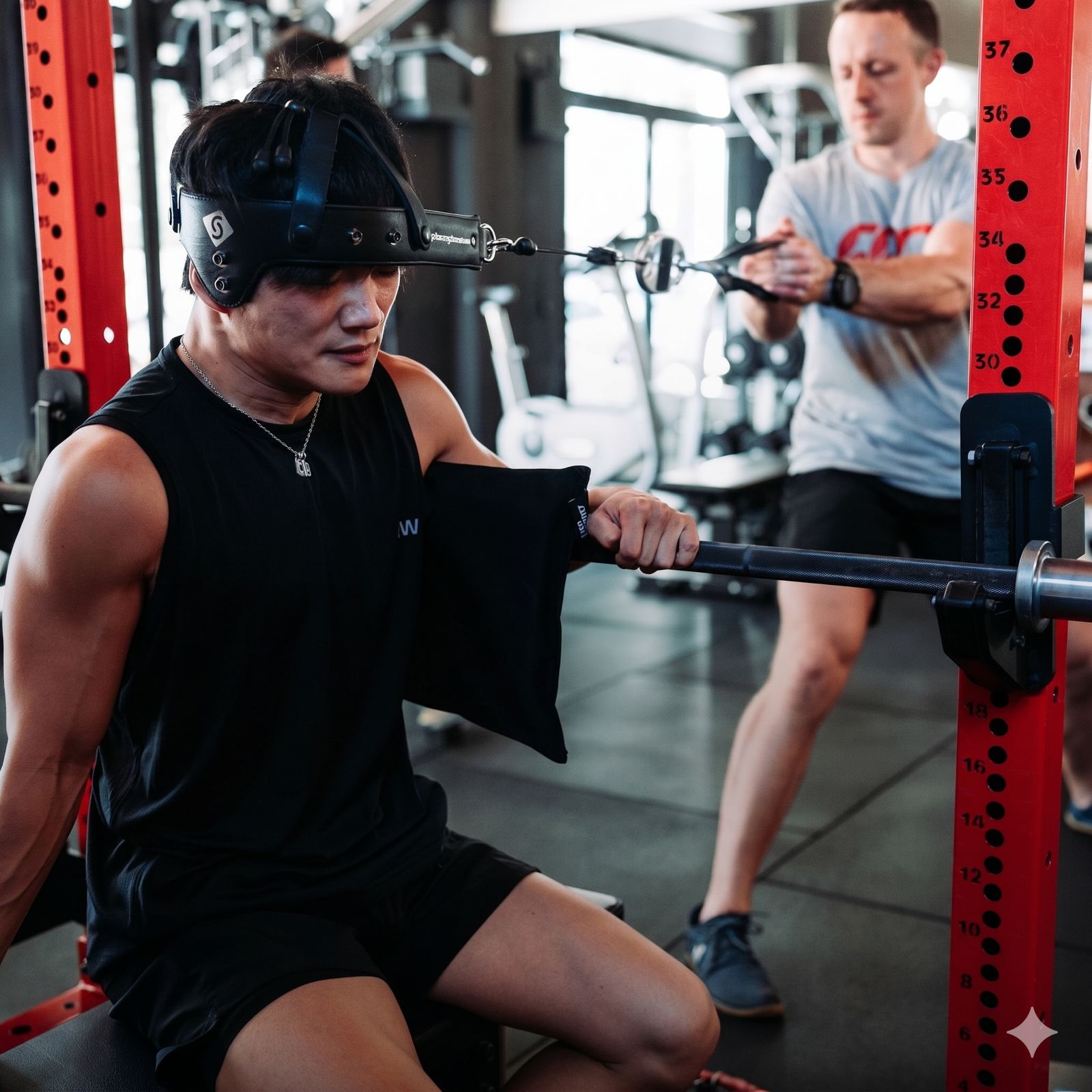
The best test of full-body strength is the isometric mid-thigh pull (IMTP): a maximal pull on a fixed bar set at mid-thigh height. Other tests target single joints or muscle groups like knee extension, hamstrings, adductors, and the neck, an area with an outsized protective role that almost nobody trains or tests.
Which metrics actually matter?
Three cover most decisions:
- Peak force - the highest force produced and the headline strength number. You have the option to report it relative to body mass (N/kg) when comparing athletes.
- Rate of force development (RFD) - how quickly force is produced. RFD captures explosive quality, and it's often the first metric to drop when an athlete is fatigued or returning from injury.
- Asymmetry - left side vs right side imbalances. Trending this matters most in rehab, where closing the gap toward the uninjured side is a core return-to-play criterion.
How often should you test?
Because isometric tests are quick and low-cost, you can test weekly or fortnightly to trend over a season. That cadence catches meaningful changes (fatigue dips, strength gains, creeping asymmetries) while a twice-a-year max-out day only tells you what already happened. Strength itself is worth protecting at every age, as it's one of the strongest levers on long-term health we know of.
What equipment do you need?
REMAKER LINK is a strain-gauge dynamometer built for exactly this: isometric testing and monitoring in the gym, clinic or field. In lab validation, a calibrated LINK tracked an industrial reference strain gauge at r = 0.9999 (see our validation page).
How the IMTP setup works with LINK
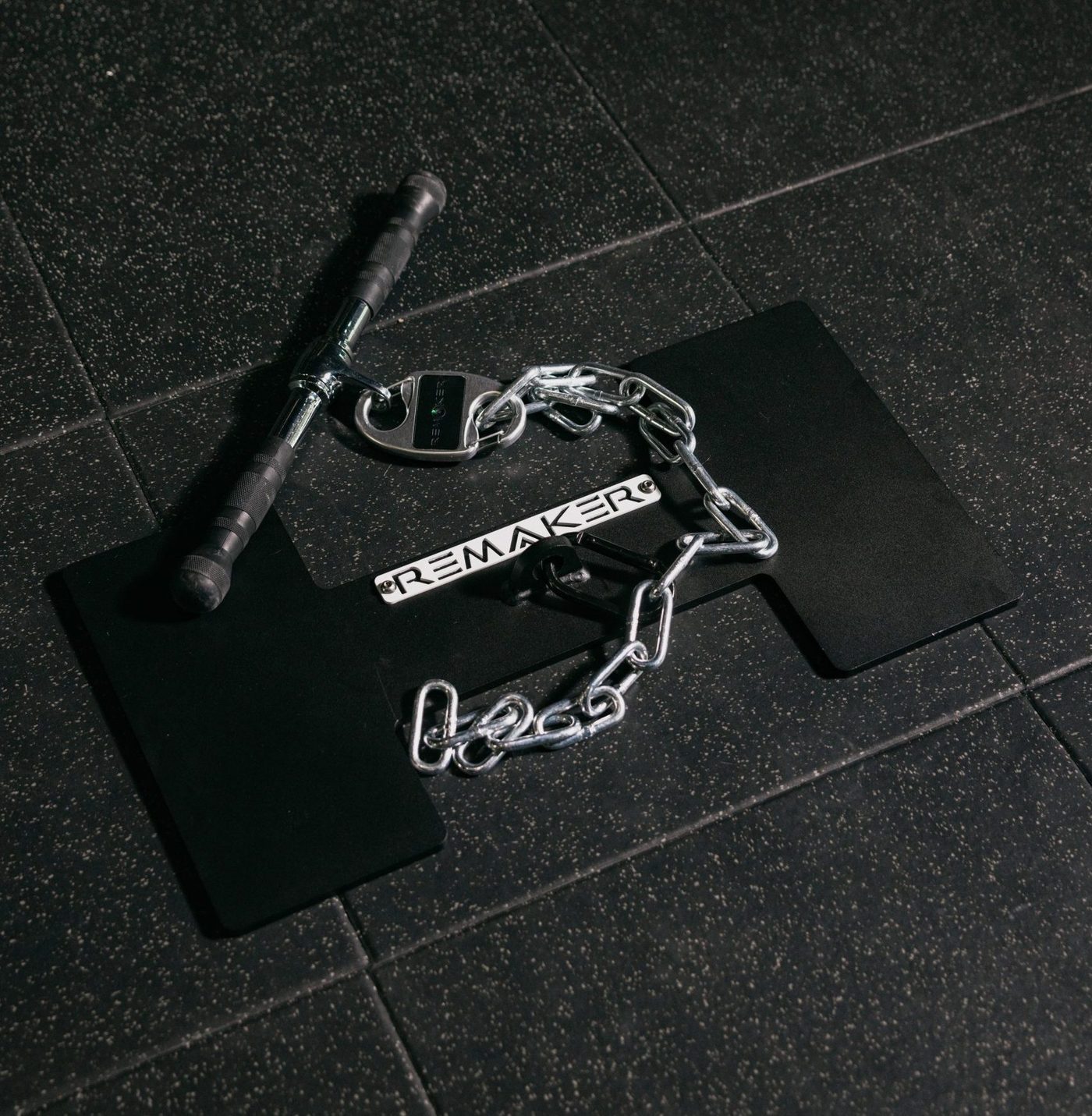
The rig is four parts: a base plate, a chain, the LINK sensor and a T-bar handle. You stand on the base plate, so your own bodyweight is the immovable anchor; the chain connects the plate and the LINK, and LINK connects to the T-bar handle. Adjust the chain per athlete for a comfortable handle height. From there, take the slack out of the chain, then pull as hard as possible for around five seconds. LINK streams the full force trace to the app and captures peak force and rate of force development from the same pull.
FAQs
Is isometric strength relevant to dynamic sport?
Yes. Isometric peak force correlates strongly with dynamic performance (sprinting, jumping, change of direction), and its reliability makes it the better monitoring tool: changes in the test reflect changes in the athlete, not changes in technique. Train dynamically, measure isometrically.
What is a good rate of force development?
There's no universal number - RFD is best used against your own baseline. Establish an athlete's normal range over a few weeks, then treat meaningful drops as a flag for fatigue or incomplete recovery, and steady rises as evidence the explosive qualities are improving.
How long does a strength test take?
With a portable dynamometer, a maximal isometric test is a 5–10 second effort. A whole squad can be tested inside a warm-up, making weekly monitoring realistic.
Deep dives in this topic
Put it into practice.
Everything in this guide is measurable with REMAKER - validated against gold-standard equipment, in the gym, clinic or field.