Strength training is the key to longevity
Dr Tom Samuel
After 30, a normal life costs you up to 8% of your muscle every decade. Past 50, strength can fall by as much as 15% a decade. And it starts earlier than most people think: muscle and power peak in your late twenties and early thirties, and decline from there. Kind of scary, isn't it.
None of it is fixed, though. The most reliable way to slow that decline, and often reverse it, is strength training, treated less like a vanity project and more like longevity medicine.
Meet the doctor behind the data
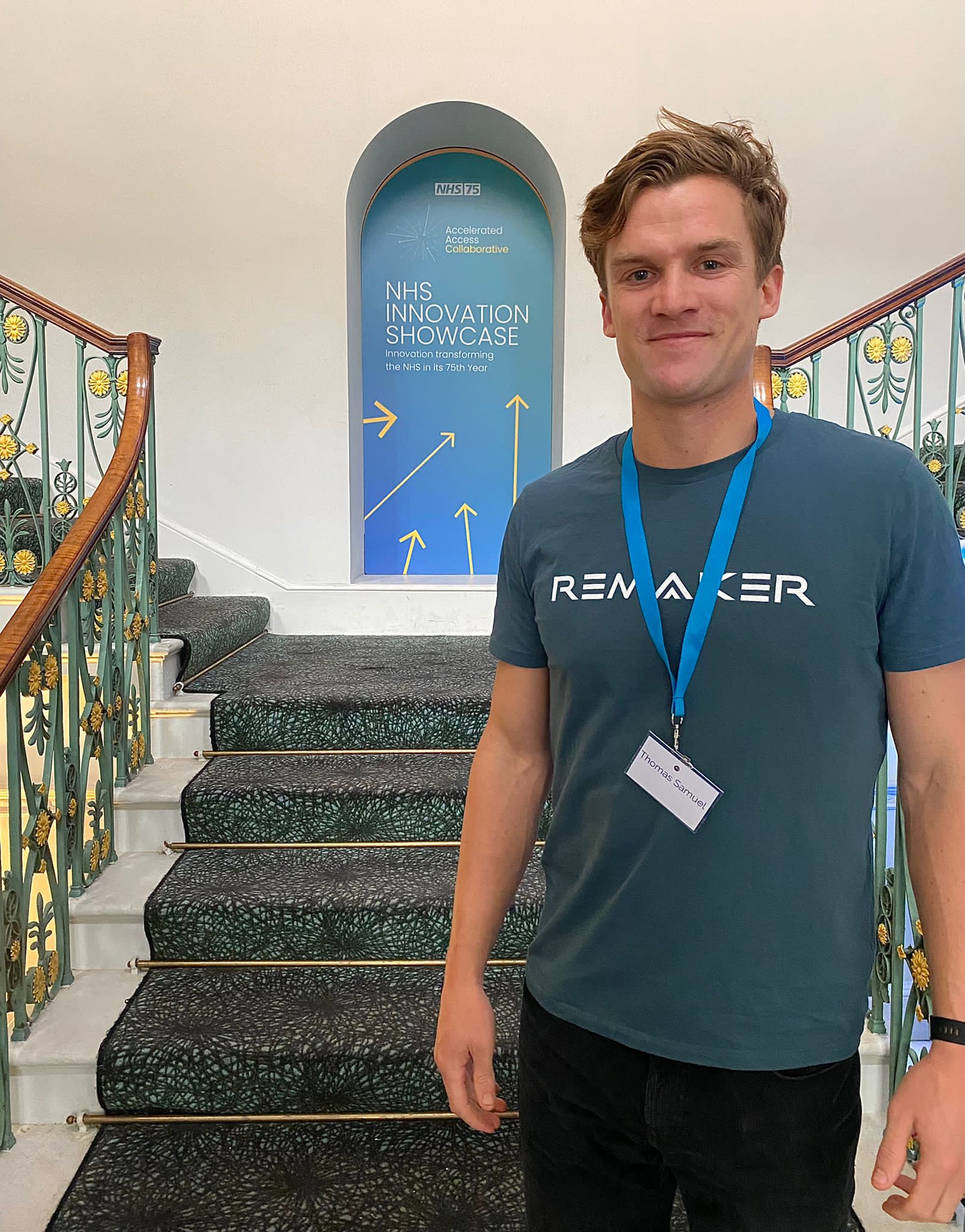
Tom Samuel is a medical doctor working in primary care and sports and exercise medicine, and he's the principal clinical lead at REMAKER. He works at the intersection between two worlds that rarely talk to each other: the clinic, where he sees what muscle loss does to people decades down the line, and the gym, where most of us train hard with almost no idea whether it's working.
"There's a whole world of trackers out there, especially in the cardio space," Tom says. These sensors track heart rate, pace, zones, and recovery, but the strength side has been left behind. The question Tom and REMAKER kept coming back to was: how do we motivate, educate, and drive real intent in strength training the way the cardio world already does?
Cardio is good. Cardio plus strength is something else.
If aerobic work is all you do, you're still doing your future self a real favour. Large cohort studies tracking hundreds of thousands of adults link meeting the aerobic activity guidelines to roughly a 29% lower risk of dying from any cause over the follow-up. That's a big number on its own.
Then it climbs. People who did both aerobic exercise and strength training saw the risk reduction reach around 40%. A 2020 BMJ study of nearly 480,000 US adults found that pattern, and meta-analyses have since repeated it. On its own, strength training is independently linked to about a 15% lower risk of all-cause mortality, and the biggest payoff arrives at a modest dose roughly 30 to 60 minutes a week.
"Cardio alone gives you a strong benefit," Tom explains. Add strength training on top and you're not just stacking two good things. You're getting an additional, independent layer of protection that aerobic work simply doesn't deliver on its own.
The point isn't only living longer. The mortality stats are the headline, but they're not the part Tom cares most about.
"Strength training has functional benefits that show up years later," he says. It's the difference between getting yourself off the floor at 80 and not being able to. Between staying in your own home and losing that independence.
The evidence is consistent. Resistance training preserves muscle mass and quality, supports bone density, improves insulin sensitivity, and lowers the risk of falls. The National Strength and Conditioning Association's position statement on older adults describes it as a powerful defence against losing strength, and against everything that loss tends to drag with it: reduced mobility first, then lost independence. One marker captures a lot of it: grip strength. In a study of around 140,000 people across 17 countries, every 5 kg drop in grip strength was associated with a 16% higher risk of death. Strength, in other words, is close to a vital sign.
Training blind leaves progress behind
Almost any strength training beats none. But training without feedback leaves a lot of progress unclaimed and leaves the door open to injury, and most people never notice.
"Strength training without measurement is, to an extent, a missed opportunity," Tom says. "You can be putting in the work and still not be progressing, and you'd have no way of knowing. The whole point is to evidence the impact of a session, to know whether someone is genuinely improving, even when the weight on the bar hasn't changed."
The science backs that up. The largest dose-response analysis of resistance training so far, drawing on nearly 300 studies, found that results are mostly driven by intensity and load. Get those right and progress them over time, and you get the most out of every session. Without measuring, you're guessing.
The metrics that actually matter
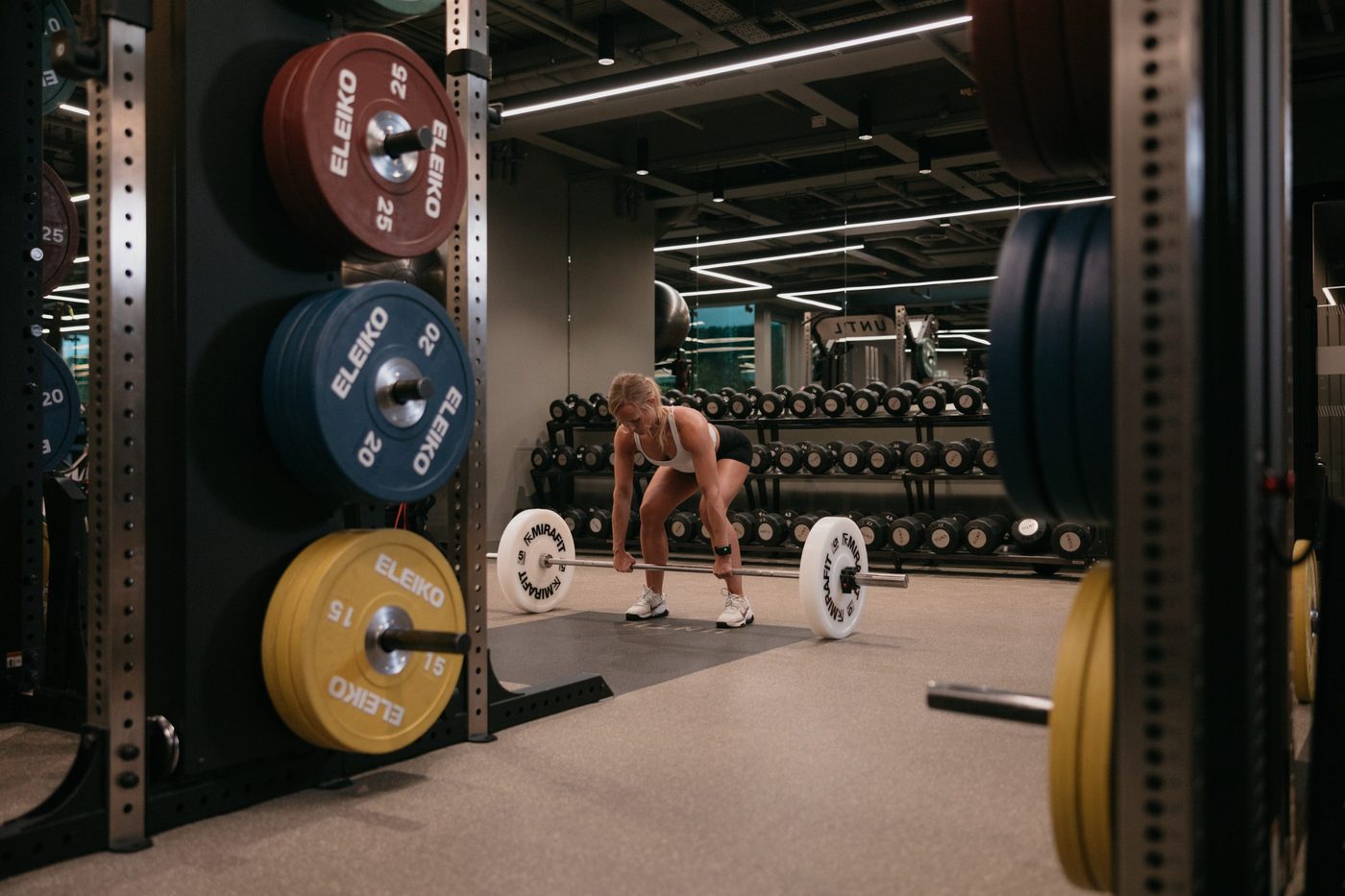
This is the part that changes how you think about a single rep. A squat is more than the act of standing back up.
"How fast you go up and down genuinely matters," Tom says. "It's not just the movement, it's the time under tension, the time in the eccentric phase as you lower, and how explosively you can drive out of the bottom in the concentric phase."
One quality matters more than almost any other as we age: power, meaning how quickly you can produce force rather than how much you can produce overall. In a recent study of nearly 4,000 adults, low muscle power predicted mortality far more strongly than low strength. People in the lowest power bracket had roughly five to seven times the risk of death of those in the highest, while strength on its own didn't reach significance. Power is what catches you when you stumble. It also fades faster than strength, and it responds well to training you can actually measure.
"It's so empowering to finally understand these numbers," Tom says. "I'm no longer sitting in the gym doing four sets of ten at whatever tempo, whatever rest, just going through the motions. Now I know the range I'm moving through, the tempo I'm hitting, the rest I'm taking. Those metrics have educated me to improve my own power and my own training."
A decade of strong living
Underneath the numbers, the idea is simple. This is about buying yourself a better old age. The research on lifelong exercisers is striking. People who stay vigorously active don't only gain a few years; they push back the onset of disability by a decade or more, squeezing the frail years into a much smaller window at the very end. That's the real return, and it isn't measured just in years, but good years - the kind where you can still travel and keep up with your grandchildren and live on your own terms.
"It's about adding years of strong living," Tom says. "So I can have a full, high-quality life at a later stage. That's what every session is really building towards."
Elite data, for everyone
This kind of data used to require a sports science team behind you. That's what we set out to change. REMAKER tracks velocity, tempo, time under tension, and power output rep by rep, then turns them into something you can act on, so the gap between a productive session and going through the motions is visible while you train.
Your muscle started leaving in your twenties. The fix is the same as it's always been: start training. The only thing that's changed is that you no longer have to guess whether it's working.
Tom Samuel is a doctor in primary care and sports & exercise medicine and the principal clinical lead at REMAKER. The figures cited here draw on peer-reviewed cohort studies and meta-analyses, including work published in the BMJ, the British Journal of Sports Medicine, the American Journal of Preventive Medicine, Mayo Clinic Proceedings, and The Lancet.